

Happy New Year! I’ve been exploring mixed media art techniques this month, mainly as a way to practice some mindfulness art. I just felt like I wanted to make some mess, but without too much thought about what I was creating. It ended up as experimentation on building layers for backgrounds. So I’ll share with you what I’ve been up to and the techniques and materials I’ve been using. The artworks are not complete, but I’ll be sure to keep you posted if I decide to work on them some more.
Mixed Media Art Techniques and Mindfulness Art
For me, creating mixed media art is an ideal way to practice mindfulness. The unpredictable nature of some of the methods prevents the tendency to think too far ahead. So it becomes about trying something and watching what happens before trying another thing.
I suppose I’m not talking about mixed media art that is very structured and formulaic. Art created with an end result in mind – nothing wrong with that either. But I’m talking about using art for restorative purposes – mindfulness art – the end result becomes secondary to that.
Applying mixed media art techniques can therefore be like taking a journey into the unknown. Each stage to be embraced in the moment. I like to build layer upon layer onto the substrate (which in an art context just means the underlying surface). Ultimately, you end up covering previous layers, never to be seen again in the exact same way – just like the unknown journey. But it provides texture for future layers, and I like that effect a lot.
The first few layers
I started off with four A4-sized pieces of mixed media paper, so nothing fancy. Nice and simple. The first thing I did was get my box of scrap papers, and pick out anything that looked appealing. For a mindfulness art practice – just choose what is resonating with you the most in the moment. I was drawn to papers and materials in red, blue, yellow and green. It was fun sorting them into four little collections.
The collections included old scrap paper, newspapers, sweet wrappers, postage stamps, raffle tickets, the gingham patterned paper that you get around fancy jam jar lids. All kinds of ephemera.
I adhered the ephemera to the paper substrates with a decoupage medium and left it to dry.
When that had dried, I applied a clear gesso over the top. This was to prepare the surface for the application of acrylic paint. I suppose this bit did involve some ‘thinking ahead’ and so was more for practical purposes than mindfulness.
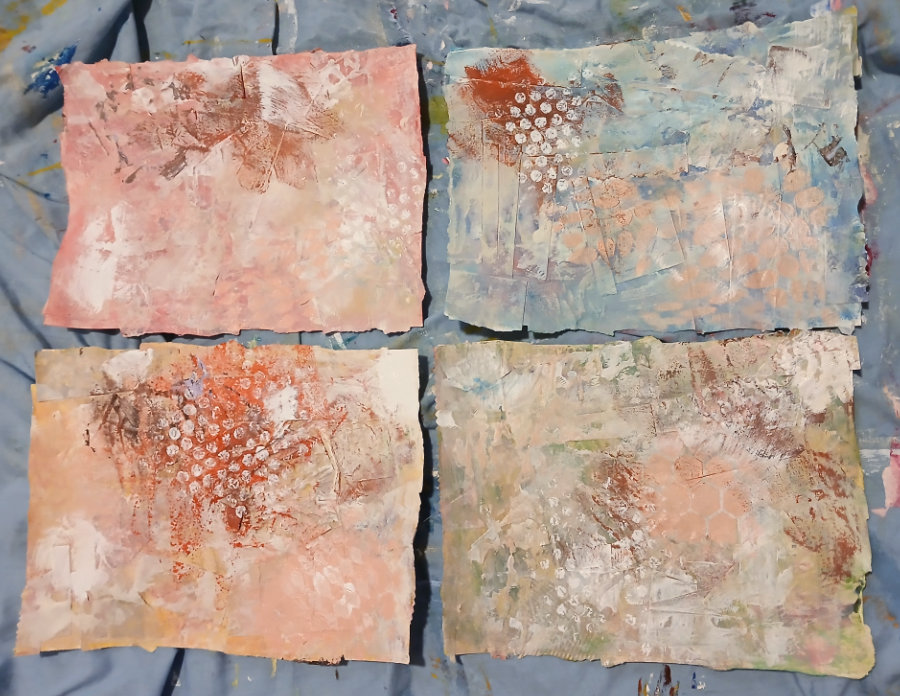
When the gesso had dried, I began to apply some paint in a few different ways which I will go into further detail next, but just look at how appealing these backgrounds are already:
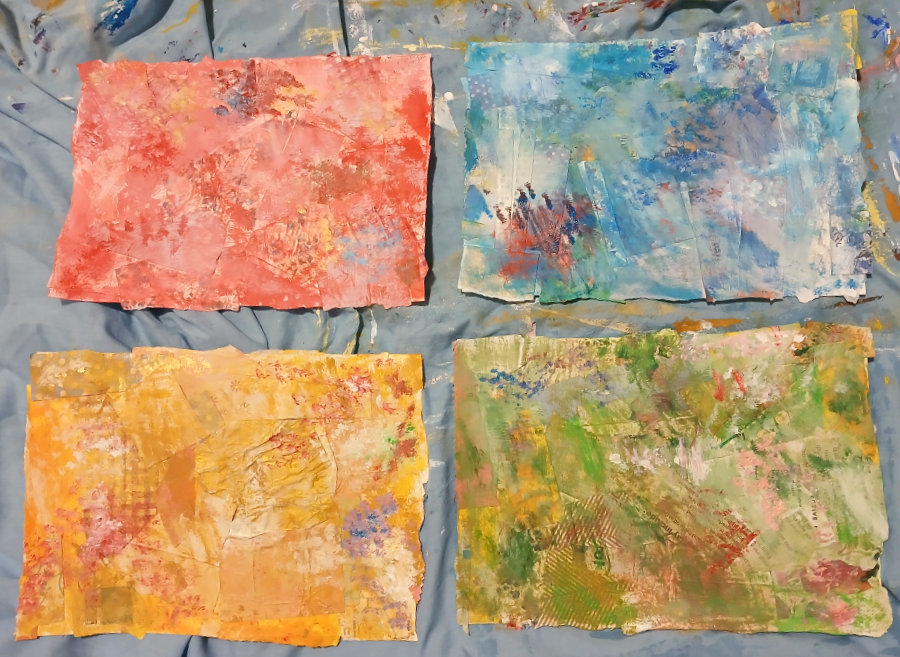
These first few layers provide some underlying colour. From an art perspective, this adds depth to an artwork – colours that will permeate future layers. From a mindfulness art perspective, this is a meditative activity.
Scumbling
This is a mixed media art technique which involves the application of paint to a surface with a very dry brush. I used a tired, old brush for this as it intuitively feels like this might be quite damaging – but at least it means the old brushes don’t feel left out!
This is scumbling over the top of a sweet wrapper:
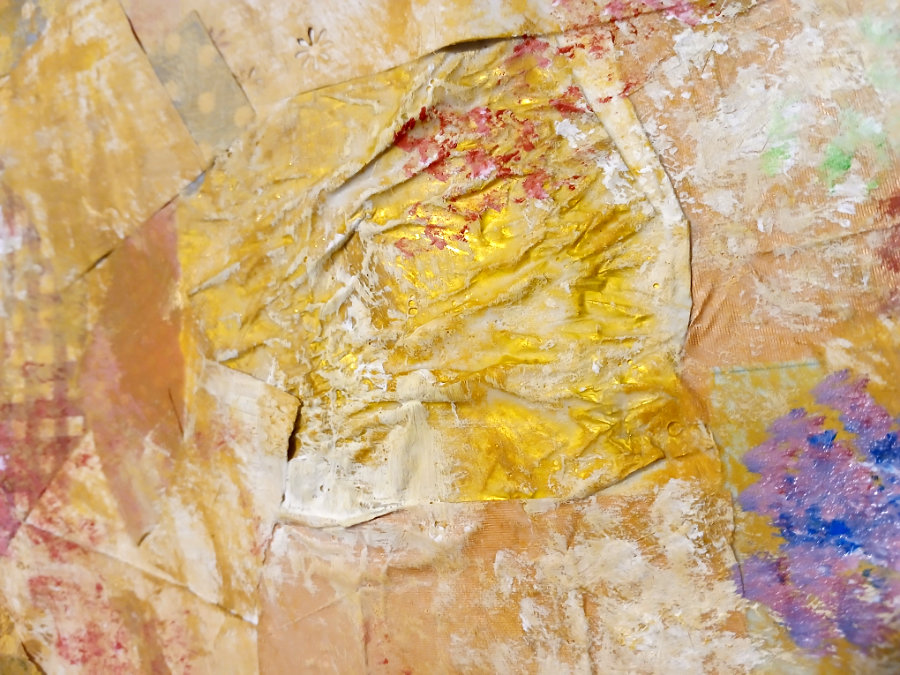
I love this effect actually. It’s maybe because I’m so enthralled by the lovely textures and colours that unfold that I find it very easy to zone out of my thoughts and zone into the moment. I like how it obscures the media beneath the paint, but not fully.
Stippling
Stippling actually refers to the use of lots of tiny dots to create a pattern or an image. But you can apply a lazier approach when it comes to mixed media art. Still with the acrylic paint, still with the old paintbrushes and still with a relatively dry brush – but instead of a more conventional brushing action, I effectively dabbed paint onto the surface.
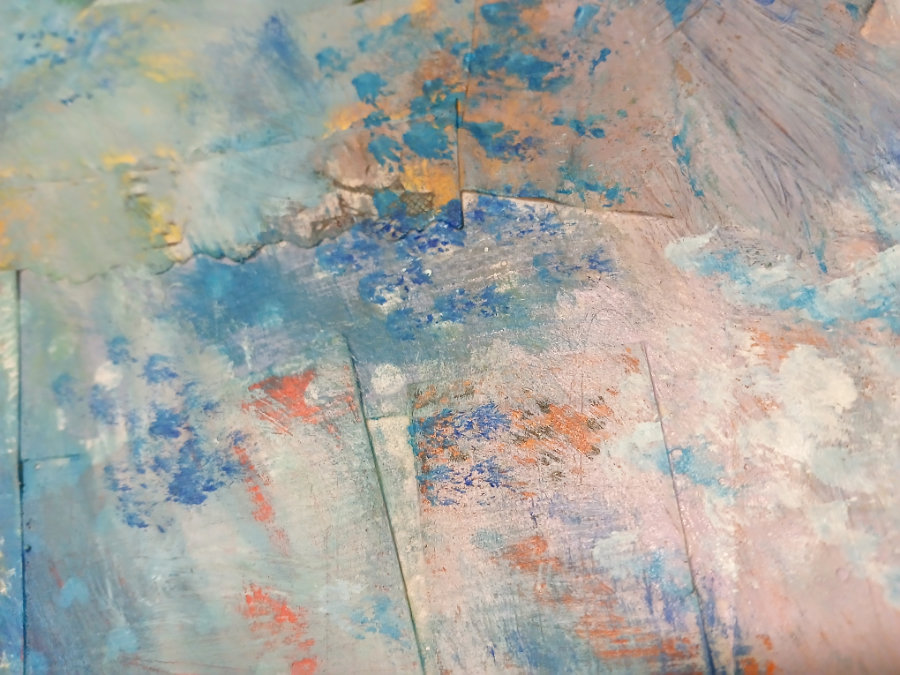
It’s quite satisfying to see the different colours blend or contrast, and to sense the emotional reaction. Harmony or dissonance.
Rollers and washes
After the scumbled and stippled paint had dried, I used my rollers and some white paint very lightly over the top.
These are the same rollers that I used for my gel plate printing (a year ago!) – you can read my blog post here for more mixed media fun (one of my favourite mixed media art techniques that I’ve tried to date!).
I then applied a wash across the entire surface of each piece. Essentially, a very diluted mix of acrylic paint, and white gesso with water.
It’s quite subtle, but it softens the colours:
Stencilling
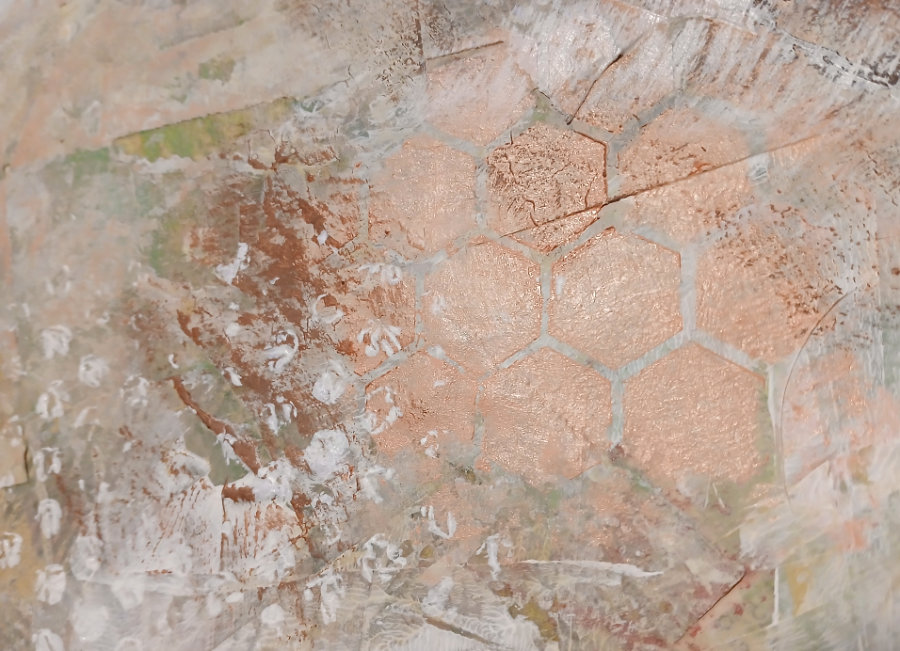
I have collected quite a few stencil sheets over the last few years, as well as other pieces which I can only describe as ‘accidental stencils’. For example, when you have to press perforated counters out of a square of cardboard (say, for a game) – that leftover bit, the inverse of the counters, that’s an accidental stencil!
This effect was created with a hexagon patterned stencil (a non-accidental stencil) and pale pink acrylic paint:
Stamping
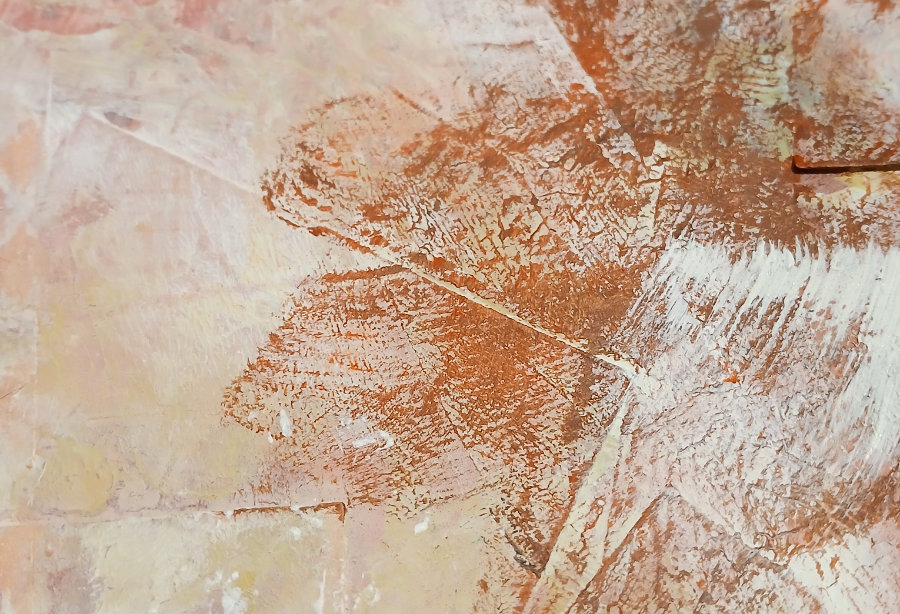
Another fun one is to use stamps to create marks. I mainly collect objects to use as stamps: bits of old packaging work well, old plastic lids from containers, egg cartons, etc.
This effect was created with an L-shaped piece of polystyrene-like plastic which was being used as packaging, stamped with a mix of orange and brown acrylic paint:
Bubble wrap also creates some nice textures:
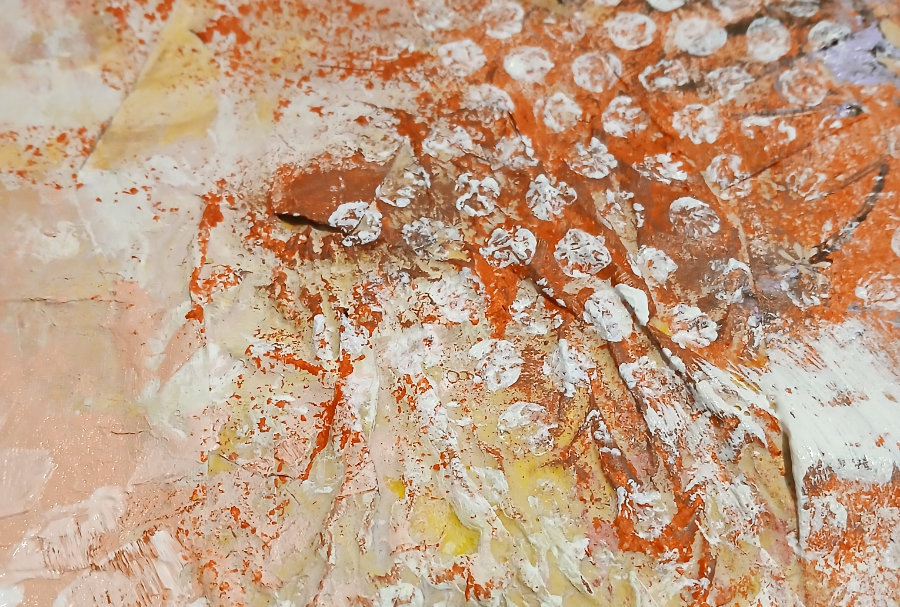
If I’m honest, it’s the ‘found objects’ that make the best stamps – and you’ll start looking at all the objects you encounter from a different perspective. Objects will be categorised as follows: ‘objects that I can use in my art’ or ‘objects that I can’t use in my art, but I will keep anyway just in case I can use them in my art one day’.
Frog Art
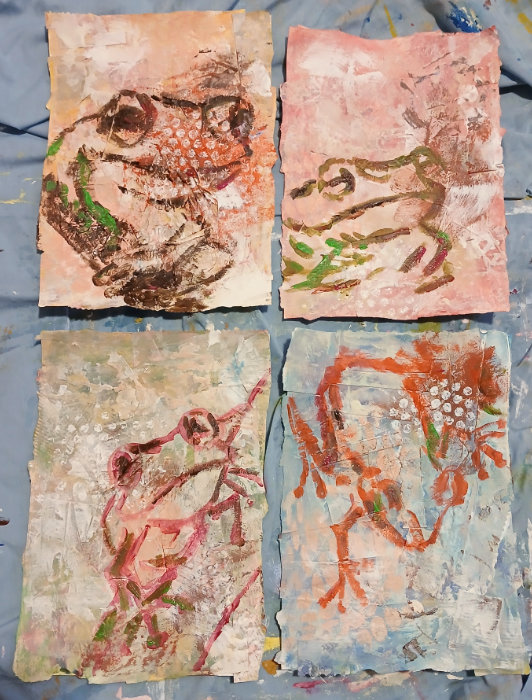
At this point, I did feel like I wanted the artworks to have a subject matter, rather than to be completely abstract. Like most people, thoughts relating to frogs are usually not too far from reach within the confines of one’s mind. And so that was when the frogs arrived.
You could say the art found some frogs on its journey.
And so while frogs in themselves are not one of the more commonly known mixed media art techniques, I’ve added a few more elements to find them on the page.
I sketched a froggy outline onto each of the four pieces, with a round brush and some acrylic paint.
And then I found some pieces of patterned fabric to create more texture – which I applied with the decoupage medium again.
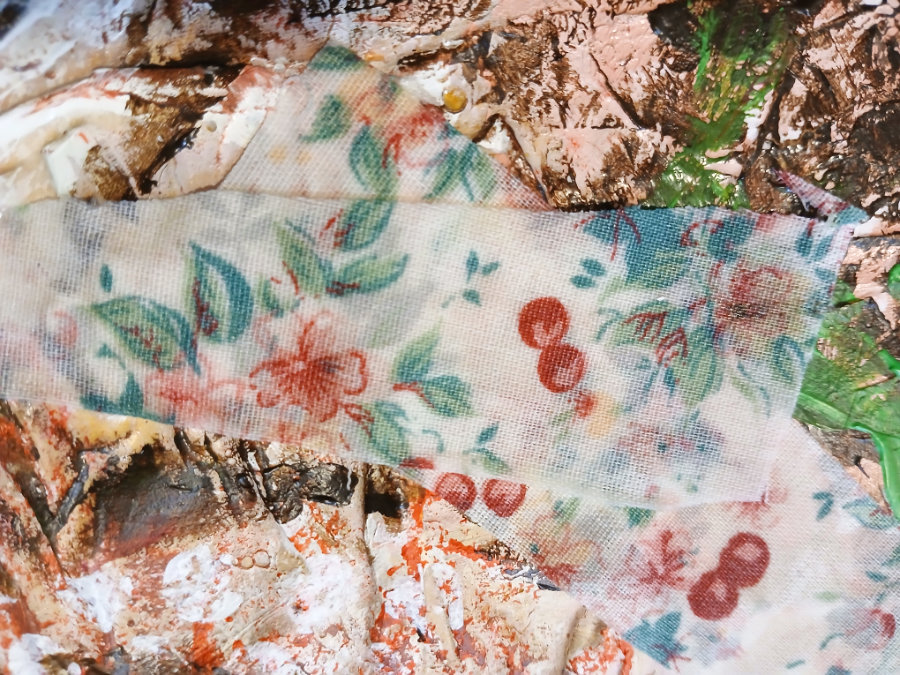
I used these fabric pieces to accent either the frogs or the branches they’re perched on.
Acrylic Medium
The only other of my mixed media art techniques left to share with you today is on acrylic mediums. I used a Liquitex acrylic medium, diluted with water, in a squeezy bottle, which I then poured onto the page in various scribbly patterns.
It needs time to set, but it can be painted over when dry:
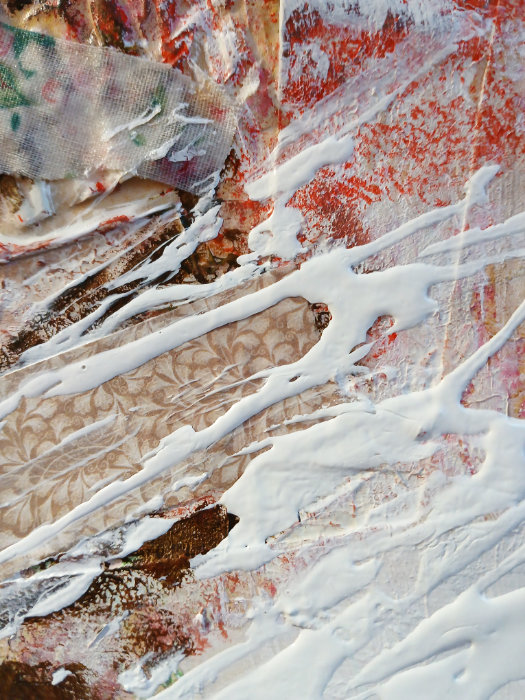
Like the fabric, I tried to use this to highlight areas of the froggy subject matter.
Textures
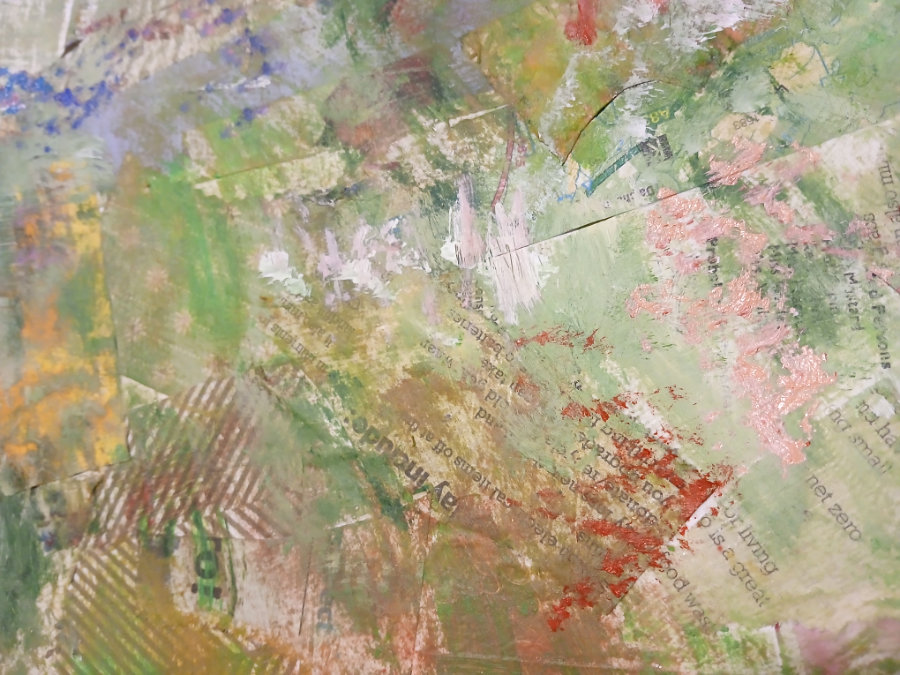
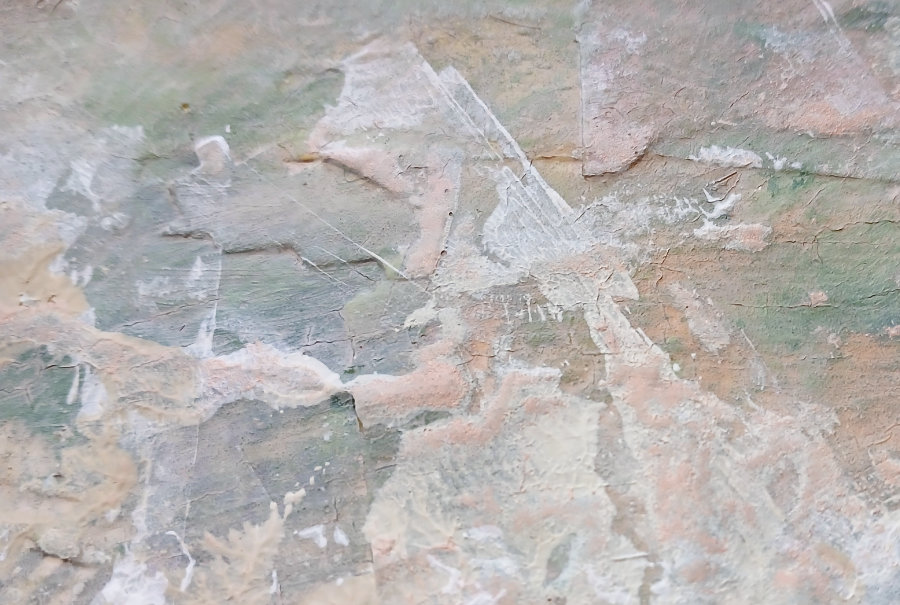
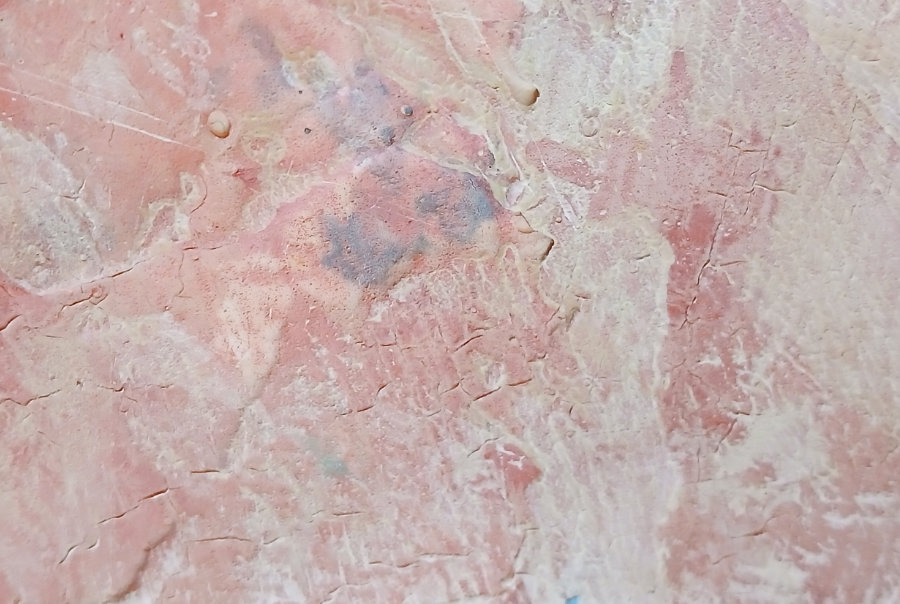
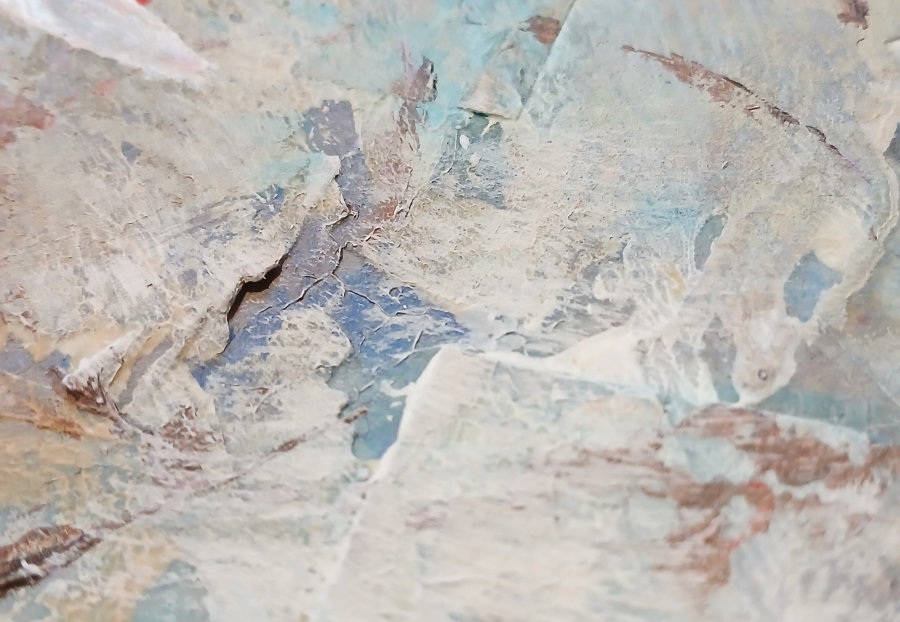
I find looking at all the textures very soothing – it’s a characteristic of mixed media art that I find enjoyable. Below are three underrated sections that I find particularly exciting:
The work in progress and next steps
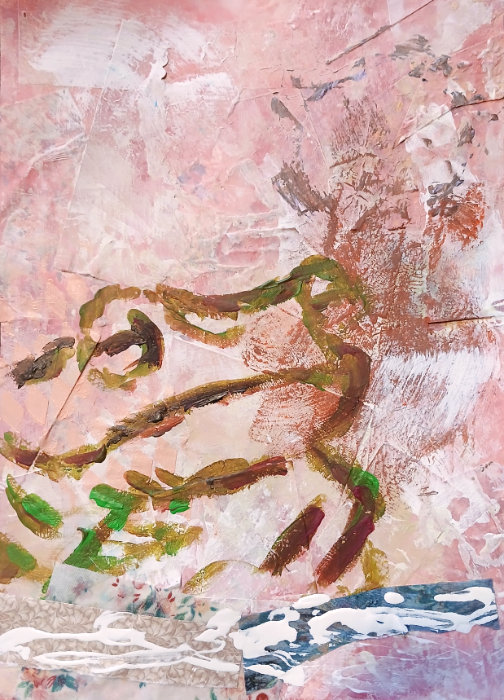
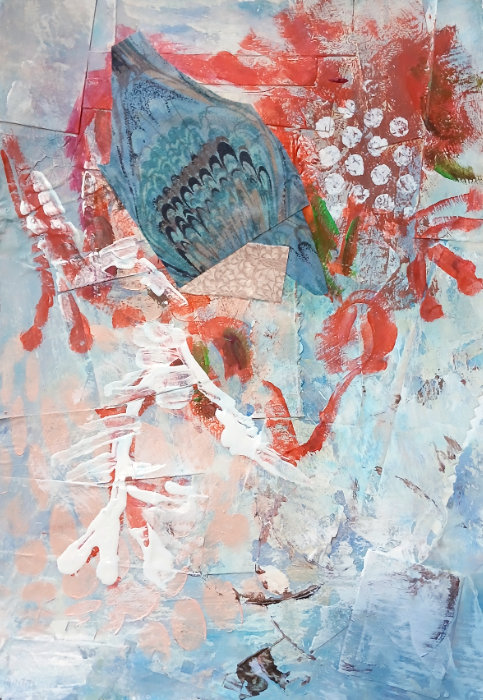
These are the four frog artworks as they stand, works-in-progress:
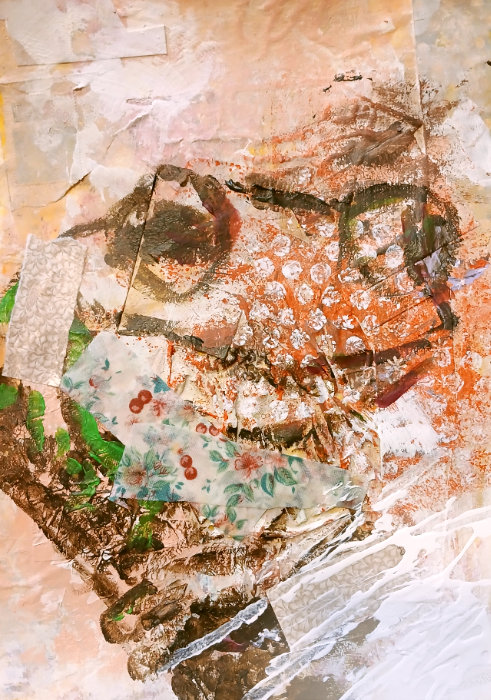
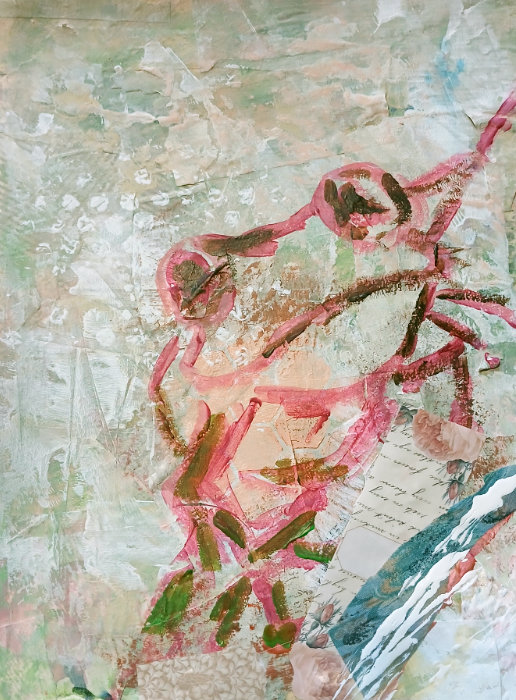
I would like to continue exploring other mixed media art techniques, and I will share any progress on the mixed media frog art. I’m hoping I can continue to use these as mindfulness art practice.
Watch this space.